
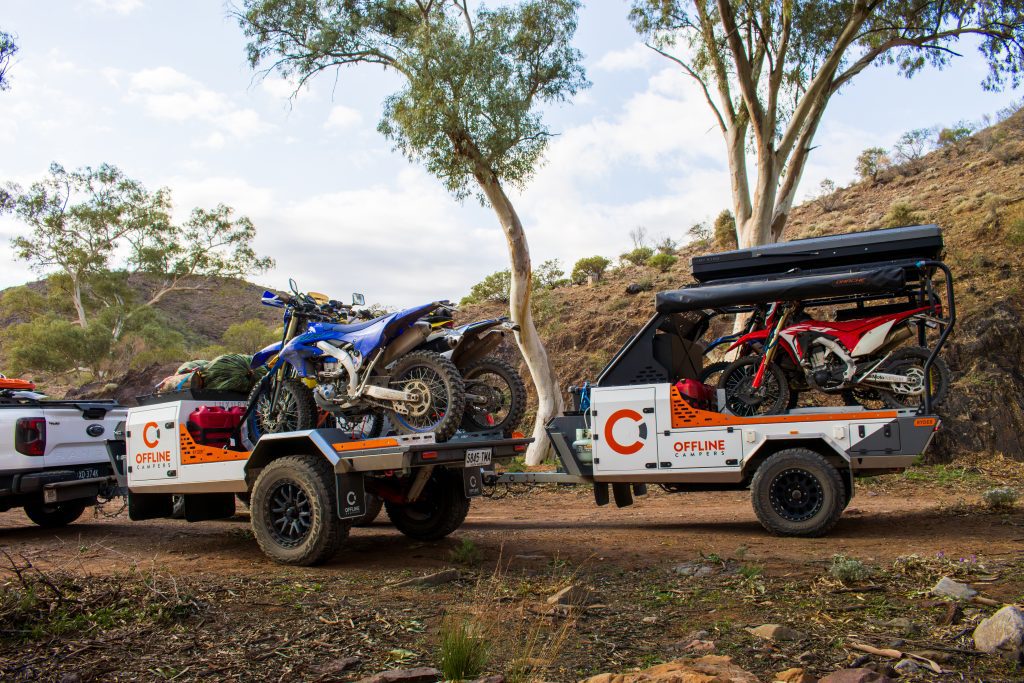
The Open Road Is Calling
It’s Friday evening. You’ve survived another exhausting week of meetings, school runs, and endless responsibilities. You look out the window thinking, “I just need to escape.”
That feeling led my family into the world of off-road camper trailers. Best decision ever. But choosing the right one? Overwhelming.
Let me simplify it for you. And if you want to explore some amazing options right away, check out Offline Campers.
Why Off-Road Campers Are Booming in 2026
Families crave authentic outdoor experiences without ridiculous hotel prices. A quality off-road camper trailer is an investment that pays for itself in just a few trips.
Plus, 2026 technology is impressive — lithium batteries, solar panels, advanced suspension, and lightweight materials make off-grid living more comfortable than ever.
Step 1: Know Your Camping Style
Before browsing trailers, ask yourself:
How rugged do you go?
- Mostly campgrounds? A basic setup works.
- Dirt roads and remote spots? Mid-range off-road capability.
- Absolute wilderness? You need heavy-duty everything.
How many people?
Consider current family size, growing kids, and whether friends tag along.
How long are your trips?
Weekend getaways need less space. Week-long adventures require better kitchens, storage, and comfort.
Step 2: Understand Trailer Types
Hard-Floor Campers
Fold out from the trailer base with tent-like living areas. Great space, quick setup, good airflow.
Best for: Families wanting spacious semi-tent camping.
Hybrid Campers
Solid roof with fold-out tent extensions. Better weather protection and storage.
Best for: Families balancing comfort and adventure.
Full Off-Road Caravans
Fully enclosed with kitchens, bathrooms, and permanent beds.
Best for: Larger families or extended trips.
Pod/Teardrop Trailers
Compact, lightweight, surprisingly capable.
Best for: Couples or small families traveling light.
Browse real examples at Offline Campers to see what suits you.
Step 3: Must-Have Features for 2026
Independent Suspension
Non-negotiable for off-road. Better handling, less chassis stress, smoother rides. Avoid outdated leaf springs.
Water System
Minimum 150L tank for families. Built-in filtration is a bonus. Grey water management is essential for responsible camping.
Solar and Battery
Look for lithium (LiFePO4) batteries, at least 200W solar panels, a quality inverter, and a battery management system.
Quality Kitchen
Slide-out kitchen, stainless steel benchtops, 2-burner gas stove, and a 12V fridge — not an icebox. It’s 2026!
Storage
You always need more. Internal compartments, external toolboxes, roof racks, and spots for recovery gear and firewood.
Build Quality
Hot-dipped galvanized chassis, reinforced off-road coupling, quality ripstop canvas, and sealed bearings for water crossings.
Step 4: Match Your Tow Vehicle
Every vehicle has maximum towing capacity and towball weight limits. Exceeding them risks transmission damage, dangerous swaying, and voided insurance.
Critical: Don’t just check dry weight. Calculate loaded weight — water, food, gear, bikes. It adds up fast.
| Tow Vehicle | Max Trailer Weight (Loaded) |
|---|---|
| Mid-size SUV | Up to 1,200 kg |
| Full-size SUV | Up to 2,500 kg |
| Full-size Pickup | Up to 3,000 kg |
| Heavy-Duty Truck | Up to 3,500 kg |
Always verify your specific vehicle’s specs.
Step 5: Set a Realistic Budget
| Trailer Type | Price Range (USD) |
|---|---|
| Pod/Teardrop | $8,000 – $20,000 |
| Hard-Floor Camper | $15,000 – $35,000 |
| Hybrid Camper | $25,000 – $50,000 |
| Full Off-Road Caravan | $40,000 – $100,000+ |
Offline Campers offers options across different budgets — perfect for comparing value.
Step 6: Test Before You Buy
- Attend camping expos — walk through models and talk to manufacturers
- Join online communities — Facebook groups and forums offer brutally honest reviews
- Rent first — the best way to test before committing
- Inspect thoroughly (especially used) — check for rust, canvas damage, tire wear, and electrical issues
Quick-Fire Checklist
- [ ] Defined your camping style
- [ ] Chosen the right trailer type
- [ ] Checked tow vehicle capacity
- [ ] Verified essential features
- [ ] Set realistic budget including extras
- [ ] Read real owner reviews
- [ ] Seen it in person or rented similar
Final Thoughts
Here’s what I’ve learned: the trailer is just a tool. Your kids won’t remember suspension specs. They’ll remember campfire stories, morning birdsong, and the time Dad’s “shortcut” went hilariously wrong.
The best off-road camper is the one that gets your family out the door and into nature — safely and often.
Do your research. Take your time. Then take the leap.
Start your adventure at Offline Campers — where the open road is always waiting.



